The Dog Gut-Brain Connection: Why Your Dog's Gut Controls More Than Digestion
Key Takeaways
- More than 90% of your dog's serotonin is produced in the gut, not the brain.
- The gut and brain talk constantly through the vagus nerve, in both directions.
- Dog Aging Project research links diverse, balanced gut bacteria with sharper, longer-lived dogs.
- Whole foods, fiber, and ginger support a healthier gut environment.
- A healthy gut is one of the most overlooked keys to a healthy, sharp brain.
If someone asked you where your dog's mood, memory, and ability to handle stress are controlled, you would probably say their brain. A few years ago, most of us would have said the same thing.
But there is a connection that changes how you think about keeping a dog healthy and sharp as they age. Much of what happens in your dog's brain actually starts somewhere else entirely: the gut.
Over 90% of Your Dog's Serotonin Starts in the Gut
Serotonin is the chemical linked to mood, sleep, and cognitive function. In dogs, more than 90% of serotonin is produced in the gut first, not the brain.
The gut and brain are connected by the vagus nerve, a direct communication line that runs in both directions. When the gut is healthy, the brain tends to function better. When the gut is out of balance, the brain can struggle: mood shifts, restless nights, slower responses, and that little spark behind your dog's eyes starts to dim. Most of us never connect the dots.
What the Dog Aging Project Discovered
Researchers at the Dog Aging Project, one of the largest canine health studies ever conducted with tens of thousands of dogs across America, found something remarkable. The bacteria in a dog's gut shift so predictably with age that gut health can reflect how a dog is actually aging.
Dogs with diverse, balanced gut bacteria tended to stay sharper and more vibrant longer. Dogs with poor gut health often declined sooner. When researchers looked at the dogs living the longest, healthiest lives, a common thread appeared: a healthy gut feeding a healthy brain.
3 Ways to Support Your Dog's Gut-Brain Connection
1. Nourish the gut before it affects the brain
When the gut is out of balance, the effects can travel through the bloodstream and disrupt normal brain function. Ginger is one of the most studied natural ingredients for supporting a healthy gut environment in dogs, which is one reason it shows up in quality supplements.
2. Feed for gut diversity
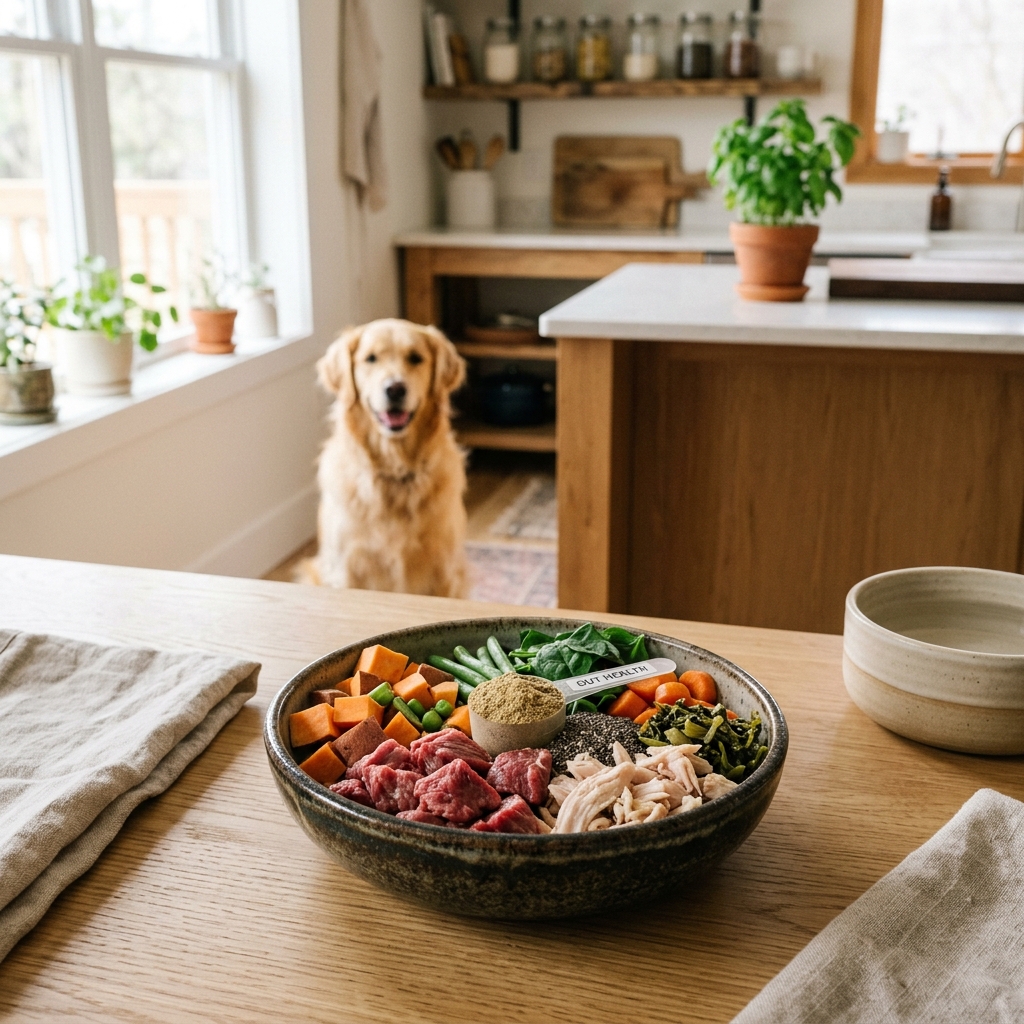
Research suggests high-protein, higher-fiber, lower-carbohydrate diets support the healthiest and most diverse gut microbiomes in dogs. Ultra-processed food heavy in fillers and artificial preservatives tends to do the opposite. You do not have to overhaul everything overnight, even adding small amounts of real, whole foods can start shifting gut bacteria in the right direction.
3. Use antioxidants that can reach the brain
Many antioxidants support the gut but get blocked before they reach the brain. Alpha lipoic acid is a rare exception that crosses both barriers and helps renew other antioxidants. You can learn more in our guide on why most nutrients never reach your dog's brain.
Small Gut Changes, Big Longevity Payoff
Start this week
- Add a spoonful of a gut-friendly whole food (such as plain pumpkin) to one meal.
- Reduce ultra-processed treats loaded with fillers.
- Watch stool quality, appetite, and energy as gentle signals of gut balance.
- Ask your vet before major diet changes, especially for puppies, small breeds, or dogs on medication.
Brain health does not always begin in the brain. Support the gut, and you support mood, sleep, focus, and the healthy aging every dog parent hopes for.