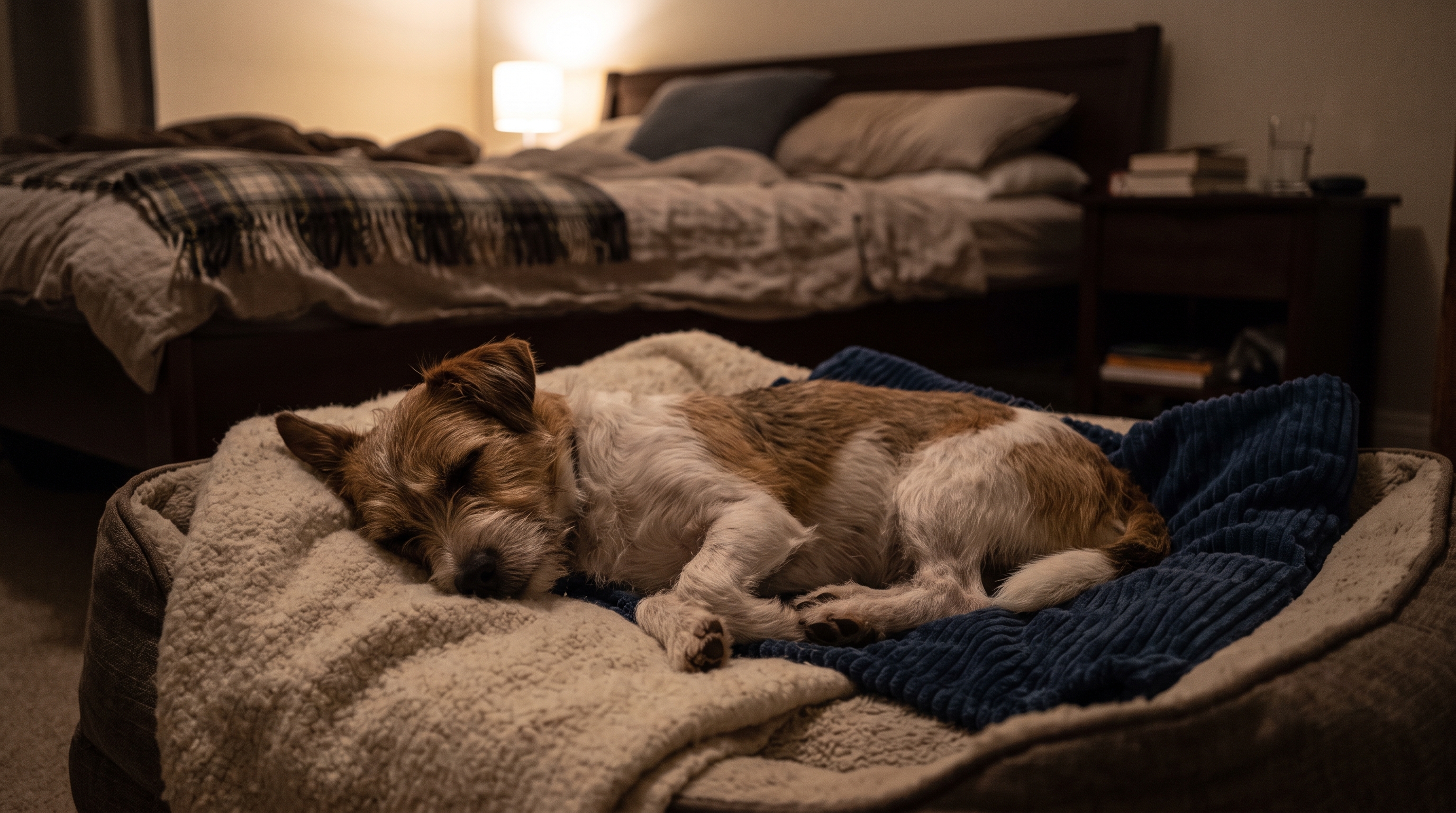
Why Is My Dog Barking at Nothing?
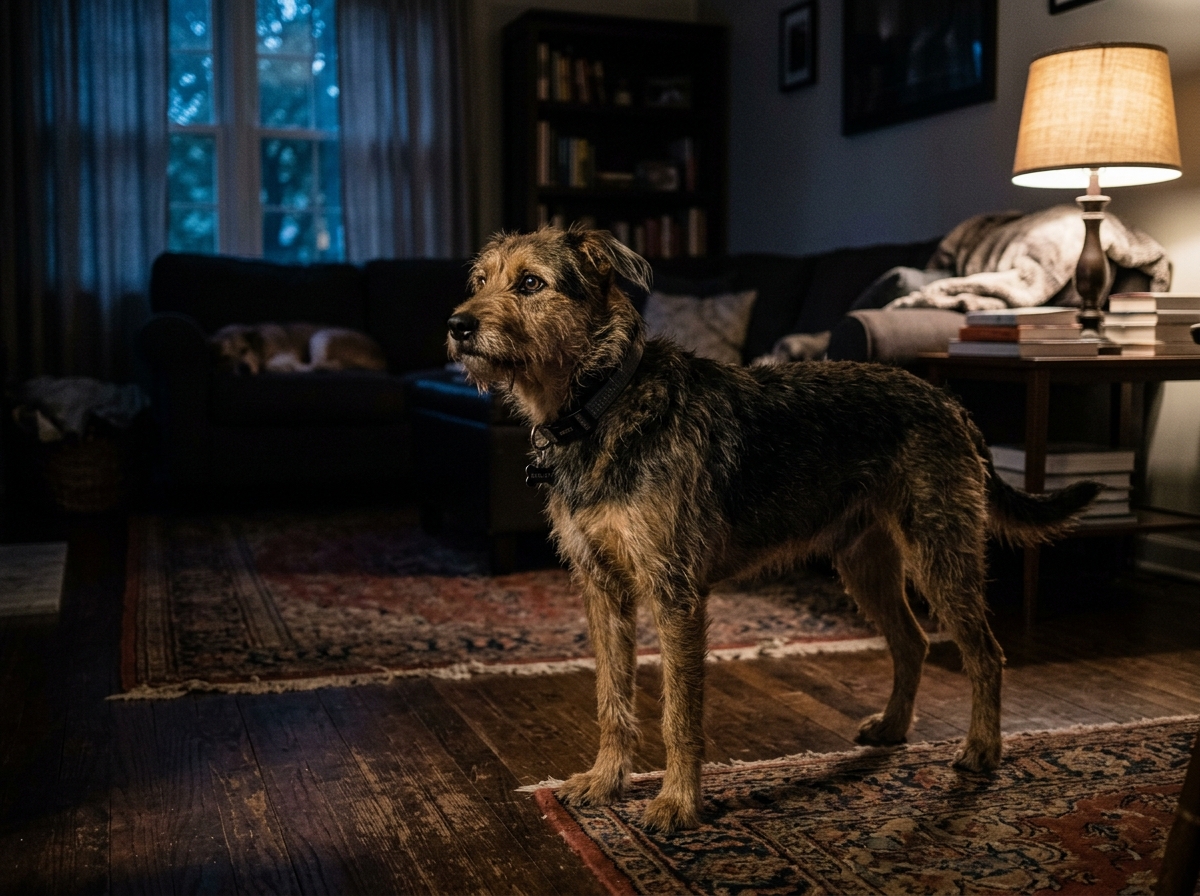
Key Takeaways
- Slowly flipping the lights on and off can reset a dog stuck in a barking loop.
- Barking at walls or corners is often a brief neurological misfire.
- In older dogs it can be an early sign of cognitive decline.
- Watch for pacing, staring, getting stuck, and confusion in familiar places.
- Routine, enrichment, sleep, and brain nutrients support long-term clarity.
It feels random. They stare. They bark. At the wall, the corner, the air. And you are left wondering what they are seeing that you are not.
Barking at “nothing” is not always bad behavior. Sometimes it is your dog's brain telling you something. The good news is there is a simple trick that helps in the moment, and clear steps to support your dog long term.
A Simple Trick That Works in Seconds
Flip the light switch. Seriously.
Not fast or frantically, just flip it on and off two or three times, slowly, with a second between each click. To us, that barely changes the room. To a dog, light changes everything, shadows, shapes, depth, and color. When their brain feels overwhelmed, that small reset is often just enough to snap them out of the loop.
Here is what it does: it forces the brain to re-orient, resets perception, and interrupts the pattern that triggers the barking.
Why Barking at Nothing Can Signal a Brain Change
Barking at nothing is often a neurological misfire, a signal that the brain is momentarily confused. In older dogs, it can be an early sign of cognitive decline, sometimes described as canine cognitive dysfunction.
Other early signs to watch alongside it include pacing at night, staring at walls, getting “stuck” in corners, forgetting familiar routines, and seeming disoriented in familiar places. If you are seeing several of these, our guide on how nutrients reach the dog brain explains what actually supports brain cells.
Early signs of cognitive change
- Barking or staring at walls and empty corners
- Pacing, circling, or restlessness at night
- Getting stuck behind furniture or in corners
- Forgetting familiar commands or routines
- Seeming confused in familiar places
How to Support the Brain for the Long Haul
You can stop the barking in the moment, but the real goal is supporting the brain over time. That means good sleep, daily mental enrichment, steady routines, and nutrients that support focus and calm.
Daily brain-support habits
- Keep a predictable daily routine, dogs feel safer with rhythm.
- Add gentle enrichment: sniff walks, puzzle feeders, simple training games.
- Protect deep sleep and reduce nighttime disruptions.
- Ask your vet about brain-supporting nutrients if you notice several early signs.
If your dog is barking at nothing, it is often not nothing. Treat it as useful information, and support their brain now and for the years ahead.